
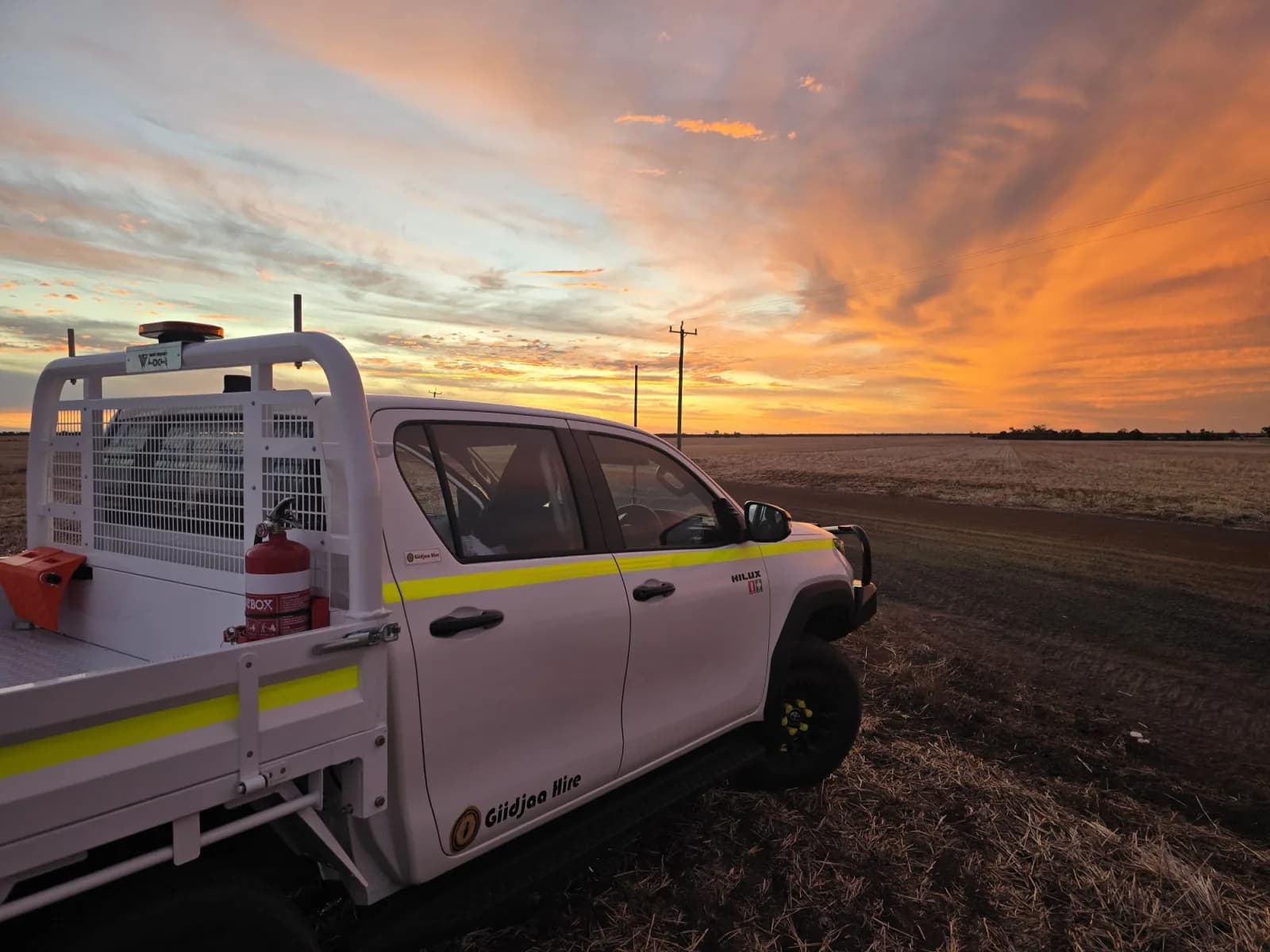
How to Choose a Site Vehicle
LandCruiser 70 Series, Hilux or Ranger. The trade-offs that actually decide it, worked through in order.
Start with the ground, not the badge
The first question is what the vehicle drives on for most of its life. A ute that spends its days on sealed roads between depots and a ute that lives on rough tracks are different purchases even though they look the same on a rate sheet.
The Toyota LandCruiser 70 Series is the answer at the harsh end. It is built for the worst conditions Australia offers, it is simple where simple matters, and it is the vehicle crews ask for when the track is genuinely rough and help is a long way away. It is also available with a manual gearbox, which some sites and some operators still prefer. What you give up is refinement, so putting one on a job that mostly runs highway kilometres is paying a comfort penalty for capability you will not use.
Hilux or Ranger for general site work?
For the bulk of site work either will do the job, and the honest answer is that the choice usually comes down to what your crews are used to and what your maintenance arrangements already support. Both are 4x4 diesel automatics in our fleet, both hold five, and both are hired in volume onto the same kinds of projects.
Where they differ is in the grade ladder. The Hilux runs from the Workmate, which is a plain and hard-wearing work truck, through the SR, which adds safety and comfort for people living in the vehicle all day, to the SR5 for project leads. The Ranger runs the XL as the workhorse and the XLT as the step up in cabin and technology for supervisors and project managers. Pick the grade against the role, not the person. A vehicle doing 300 kilometres a day with two people in it justifies a better cabin on fatigue grounds alone.
Crew size, cab configuration and tray versus tub
Cab configuration is a straight trade. A single cab gives you the longest load area and suits a vehicle that carries gear and one or two people. A dual cab carries the crew but shortens what is behind them. The mistake is ordering dual cabs by default and then finding the load space will not take what the trade actually needs to move, or ordering single cabs and then running a second vehicle to carry the people.
Tray versus tub follows the same logic. A tub is fine for tools and general kit. A tray is the answer when you need to strap odd loads, fit toolboxes or a canopy, or load from the side, and it is easier to work off in the field. Count the crew, list what has to travel with them, then choose. If the answer is that the crew and the gear do not fit in one vehicle, the cheaper fix is usually a van or a bus for the people rather than a bigger ute, which is covered on our people transport page. Where the tray itself is the point, the dedicated builds are covered on our single cab and flatbed and fitter truck pages.
The question that overrides all of it
Whichever base vehicle you land on, it has to meet the access standard of the site it is going to. Our utes are built to mining surface, underground mining, infrastructure and Queensland Safety Together requirements depending on the destination, and the fitout differs accordingly. Underground spec vehicles are supplied on hire-to-buy only. In practice the site standard narrows the field before preference does, so tell us where the vehicle is going first. See what mine spec requires for the fitout side of that.
See the range
All of the vehicles discussed here are on the ute range page, and mine spec vehicle hire explains fitout, regions and delivery. If you want a recommendation rather than a catalogue, tell us the site, the crew size and what has to travel with them and we will tell you what we would put on it.
Page updated 9 August 2026
Not sure which vehicle fits the job?
Tell us the site, the crew and the terrain. We'll come back with a recommendation, availability and rates.